
Manuka Honey - Eve's Amazing Natural Healing Qualities For Your Skin
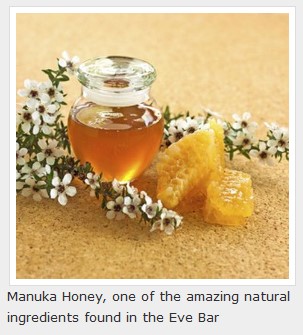
Manuka Honey – is produced in New Zealand by bees that pollinate the native manuka bush. We select only the highest therapeutic grade of Manuka honey with a UMF rating of 30+, far superior to the commonly used 12+-16+, it's more exclusive but well worth it..heres why!
'Pure, organic Manuka Honey is the perfect natural ingredient to help cure acne, pimples and skin infections,'
Manuka works wonders for blemished skin because of its natural antibacterial properties. It's also a potent anti-inflammatory, so soothes inflamed skin while healing blemishes. It also helps balance the skin’s pH and contains amino acids which casts off dead skin cells, helping to keep pores clear.
Manuka honey has significant beauty benefits. 'Pure, organic Manuka Honey is the perfect natural ingredient to help cure acne, pimples and skin infections,' says ESI's skincare expert David Ewins. 'It's also a natural moisturizer that improves skin hydration because it's able to absorb moisture directly from the air and draw it into the skin.'
It is used in both traditional and modern medicine for its natural antibacterial properties. In addition to containing hydrogen peroxide, Manuka honey is high in the antibacterial methylglyoxal (MG). MG is found in most types of honey in small quantities. However, Manuka honey contains up to 100 times more MG than normal honey.
MG has been shown to increase collagen cross-linking, promoting the structural growth of collagen in skin cells. And since amino acids are the building blacks of collagen, they also protect collagen. Healthy collagen means healthy, firm, youthful-looking skin.
Manuka honey has been used since ancient times to treat multiple conditions. It wasn't until the late 19th century that researchers discovered that honey has natural antibacterial qualities.
‘rediscovered’ by the medical profession
Honey is an ancient remedy for the treatment of infected wounds, which has recently been ‘rediscovered’ by the medical profession, particularly where conventional modern therapeutic agents fail. The first written reference to honey, a Sumerian tablet writing, dating back to 2100-2000 BC, mentions honey's use as a drug and an ointment. Aristotle (384-322 BC), when discussing different honeys, referred to pale honey as being “good as a salve for sore eyes and wounds
Honey protects against damage caused by bacteria. Some honey also stimulates production of stem cells that can repair tissue damaged by pimples and acne. In addition, honey has an anti-inflammatory action that can quickly reduce pain and inflammation once it is applied.
The higher the concentration of MG, the stronger the antibiotic effect. But, there also be other compounds involved in the medicinal effect of manuka honey.
In manuka honey, MG comes from the conversion of another compound -- dihydroxyacetone -- that is found in high concentration in the nectar of manuka flowers.
Biochemist professor Peter Molan of the Honey Research Unit at the University of Waikato, in the central North Island, has identified one particular type of honey with extraordinary healing qualities.
Professor Molan has shown that honey made from the flowers of the manuka bush, a native of New Zealand, has antibacterial properties over and above those of other honeys.
Mystery Ingredient
He said: "In all honeys, there is - to different levels - hydrogen peroxide produced from an enzyme that bees add to the nectar.
"In manuka honey there's something else besides the hydrogen peroxide.
"And there's nothing like that ever been found anywhere else in the world."
That "something else" has proved very hard to pin down. Even now, after more than twenty years of research, Peter Molan admits he still has no idea exactly what it is.
But he has given it a name: unique manuka factor, or UMF.
And he has found a way to measure its antibacterial efficacy, by comparing UMF manuka honey with a standard antiseptic (carbolic, or phenol) in it's ability to fight bacteria. The results are astonishing.
He said: "We know it has a very broad spectrum of action.
"It works on bacteria, fungi, protozoa. We haven't found anything it doesn't work on among infectious organisms."
Honey producers have developed a scale for rating the potency of manuka honey. The rating is called UMF, which stands for Unique Manuka Factor.
The UMF rating is thought to correspond with the concentration of MG and other compounds. Not all honey labeled as manuka honey contains significant levels of antibacterial factors. To be considered potent enough to be therapeutic, manuka honey needs a minimum rating of 10 UMF. Honey at or above that level is marketed as "UMF Manuka Honey" or "Active Manuka Honey."
The health benefits of Manuka honey are well known, but have you ever thought about incorporating it into your beauty regime? The Eve Skin Rejuvenation Bar has it incorporated into your skin care routine for you with a simple daily 2 min application. Manuka is only one of over a dozen natural ingredients we've combined to deliver a unique blend of tissue regeneration, correction and protection.
https://youtu.be/QJpRdYoAMdE
https://youtu.be/BdIWStwNtgM?t=14s
The Eve product does not require testing on animals, they’re natural and safe.
Sign In
Create New Account